

Tanks and Pumps
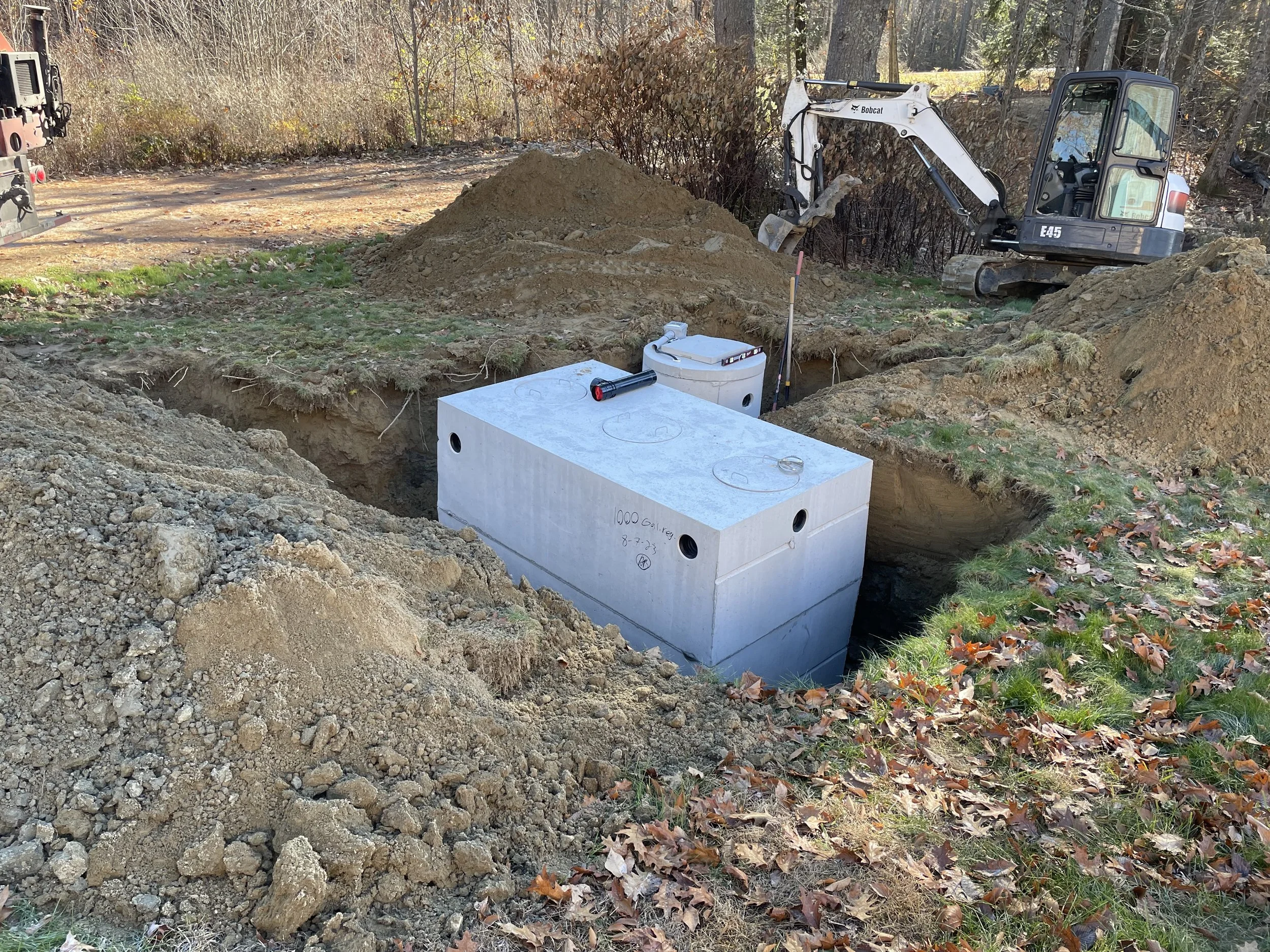
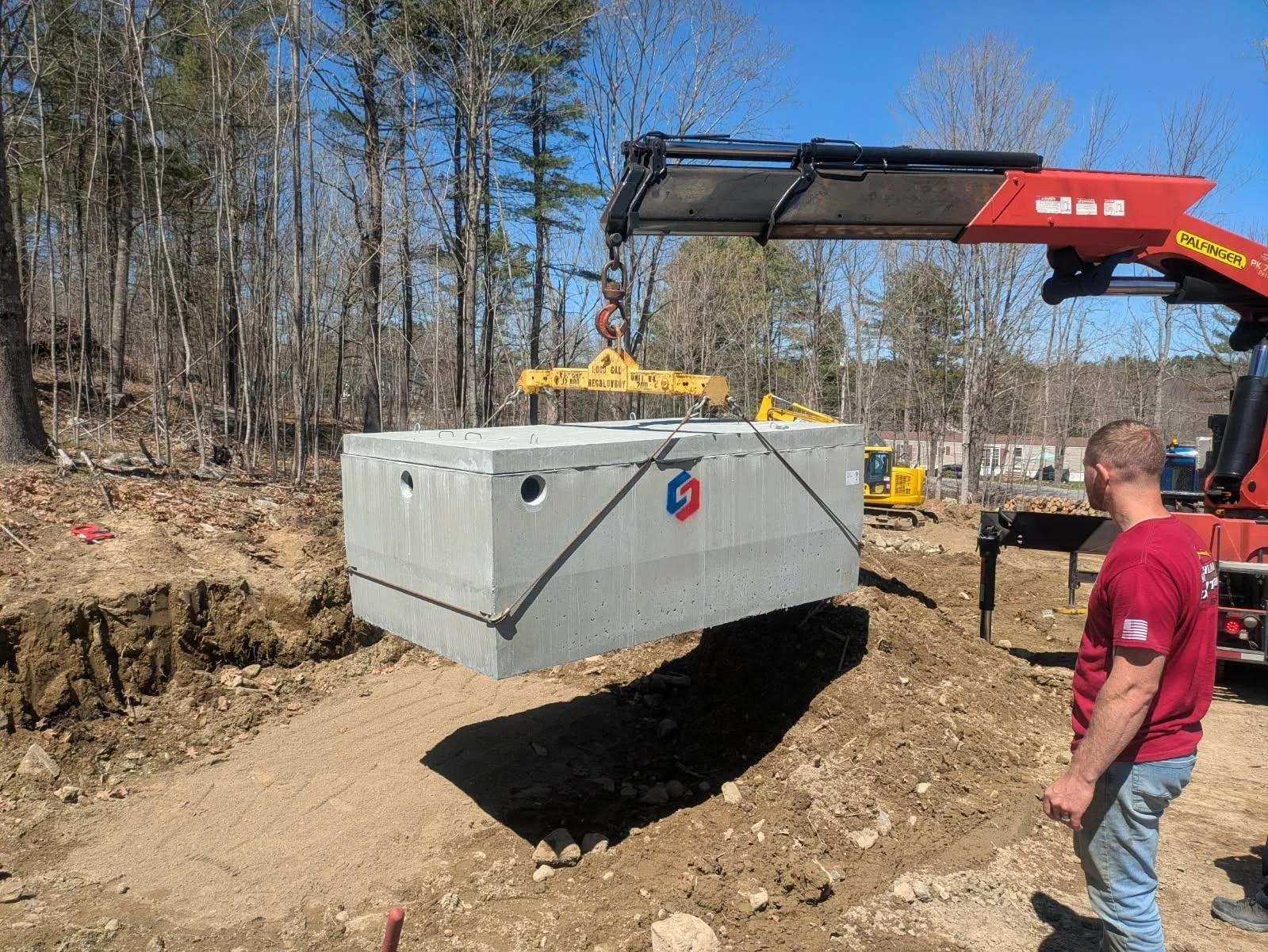
A key part of any septic system is the tank. The standard septic tank used for new residential construction will be made of precast concrete with 1,000 gallon capacity. Several options and variations are also available for sites with special challenges.
The tank is the first stop for all waste coming out of the house. It is built with interior baffles to slow down the flow of the water so that the materials can separate into three distinct layers. On top they will form the “scum” layer: grease, soap, oil, etc. Then the “liquid” layer, this is the effluent or wastewater that will be drained out to the leach field. On the bottom forms the “sludge”…heavier solids.
A lot happens inside of a properly functioning septic tank. Only the wastewater is allowed to flow out and into the leach field, with the beginnings of bacterial breakdown and treatment. The septic tank relies on anaerobic bacteria to break down the organic material which will reduce the volume of solids and begin the treatment process for the wastewater. This natural breakdown process is how the septic doesn’t simply fill up with solids over time.
Tanks do require periodic maintenance. Depending on size and usage you should be planning to have your septic tank pumped every two to three years.
An Effluent Pump is a secondary component which is necessary in some systems. It is used when site conditions do not allow for gravity drainage from the septic tank to the leach field. The wastewater drains from the tank, into the “pump station” and is then sent via an electric water pump up to the leach field.
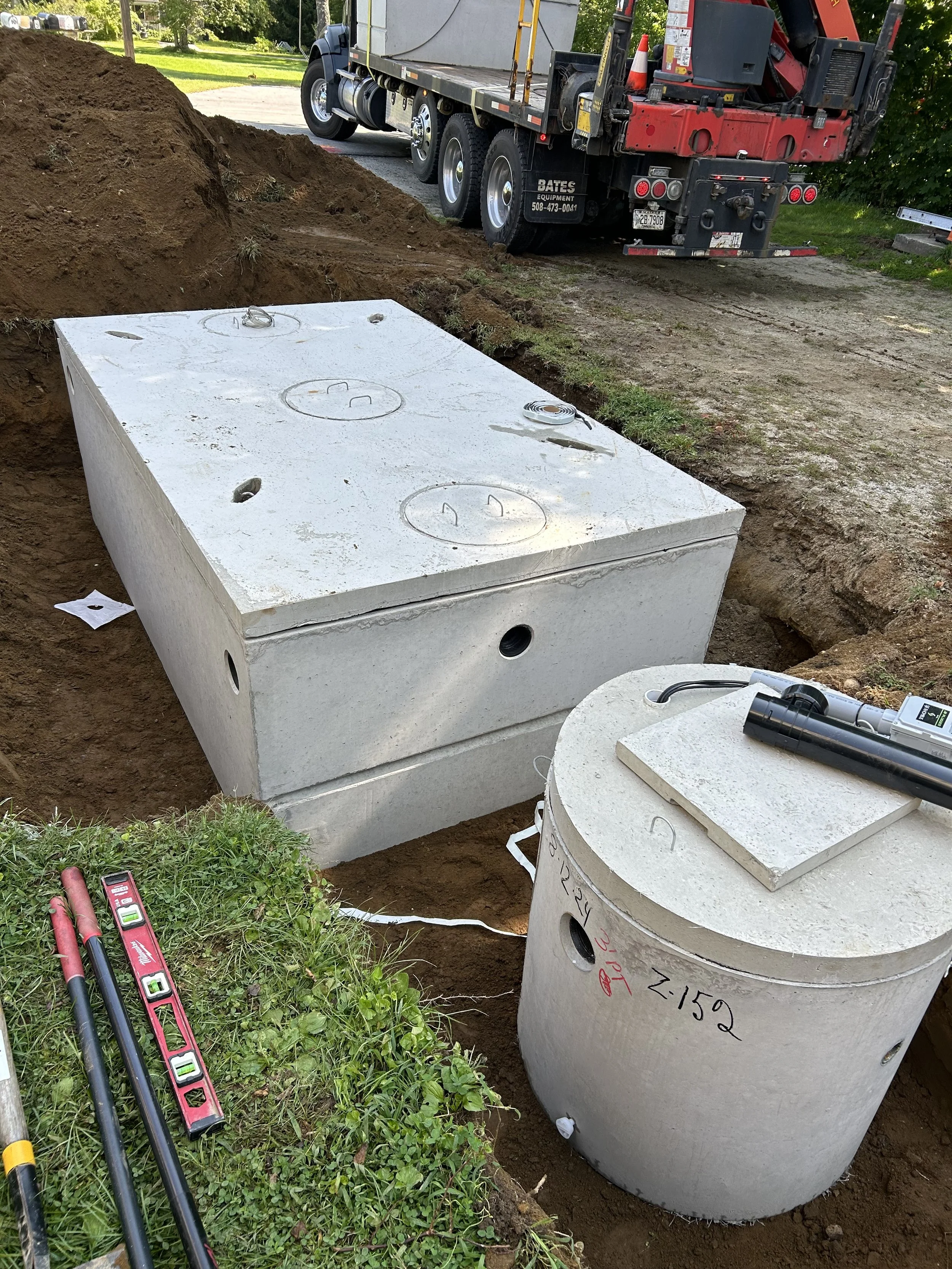
Pictured here are two different types of effluent pump systems. The first is a traditional 1,000 gallon septic tank which is plumbed into the secondary pump station. This is a preferred method for some people as the secondary tank allows for a much greater capacity of wastewater which will cause the pump to run less and send a larger charge of waste into the leach field. Running the pump less can mean that you have more usable time with the system before having to repair or replace major components such as the pump. Downsides to this setup are space, and added potential points of failure, as you now have two separate tanks in the ground. Also, sending such a significant charge of wastewater to the leach field is generally much harder on its ability to effectively treat and distribute the waste into the soil.
The next picture is a one piece or “integrated” tank with pump station inside of it. It uses the exact same type of pump and functions the same, except it is all built into one tank. The capacity of effluent storage in this tank is much smaller, generally 25 gallons verses 100 in the pump station, causing the pump to run more often for shorter periods of time. This can be a potential for quicker wear on the pump, but has the real benefit of allowing your leach field to function much more like it was designed to with smaller, more frequent doses of wastewater.
Some Notable Variations
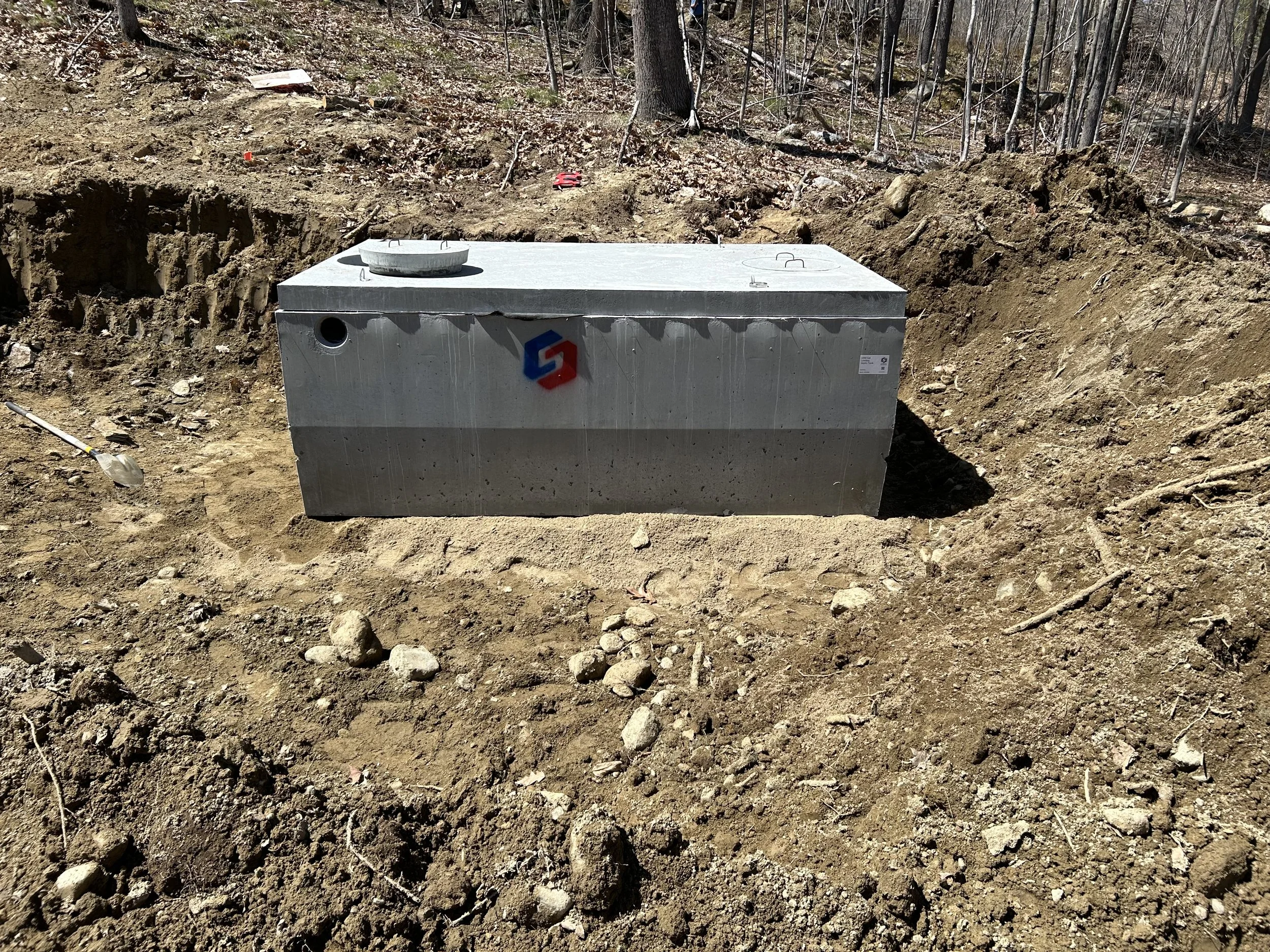
This is a “lowboy” tank. It is a standard 1,000 gallon, precast concrete tank, but it is much shorter and wider. It is used on sites where depth for a standard dimensioned tank may not be possible or practical.
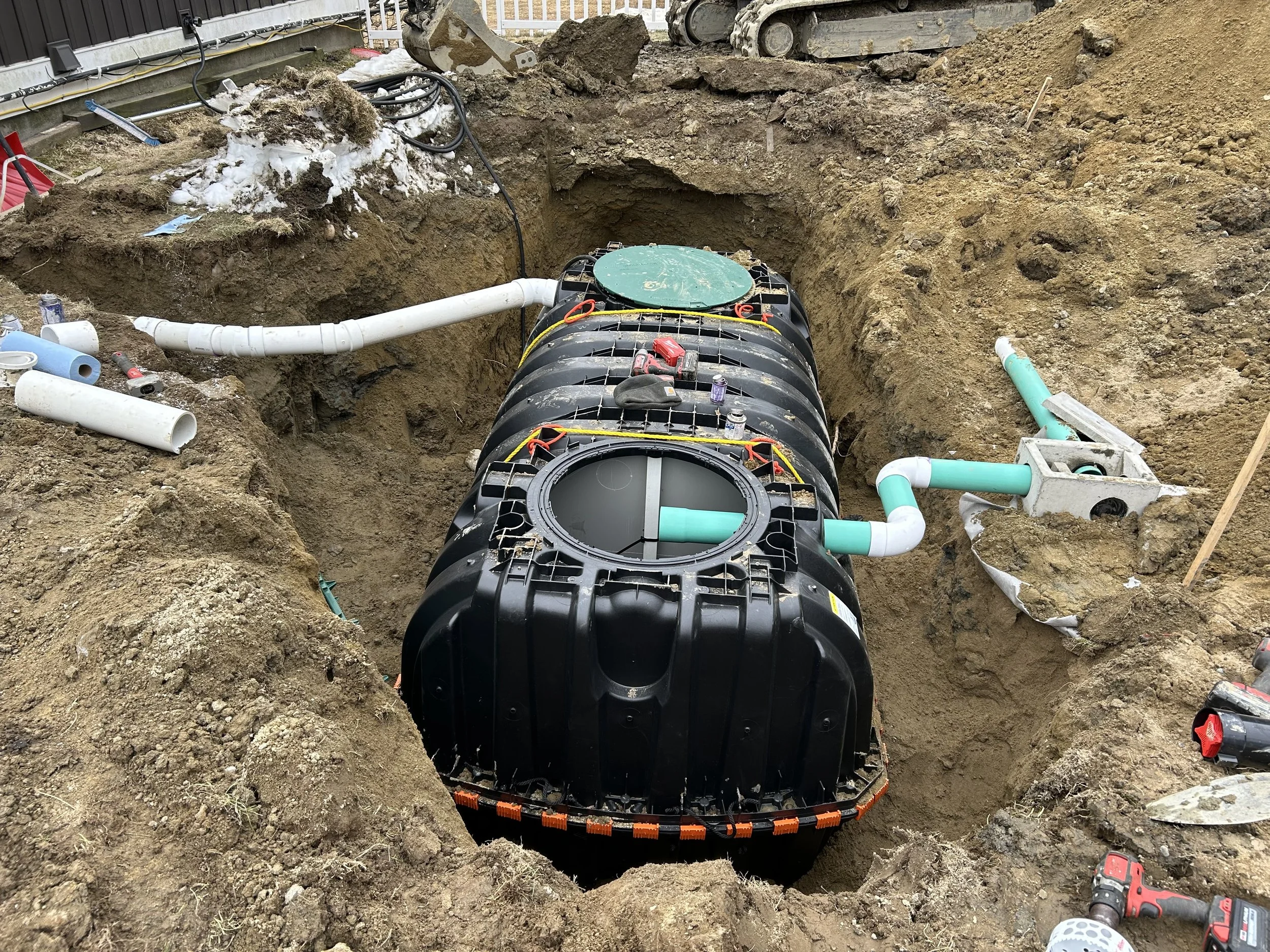
Pictured here is a plastic septic tank. These are much lighter than a concrete tank, which makes them versatile and useful for tight spaces or any situation where you might be limited to installing with smaller equipment.
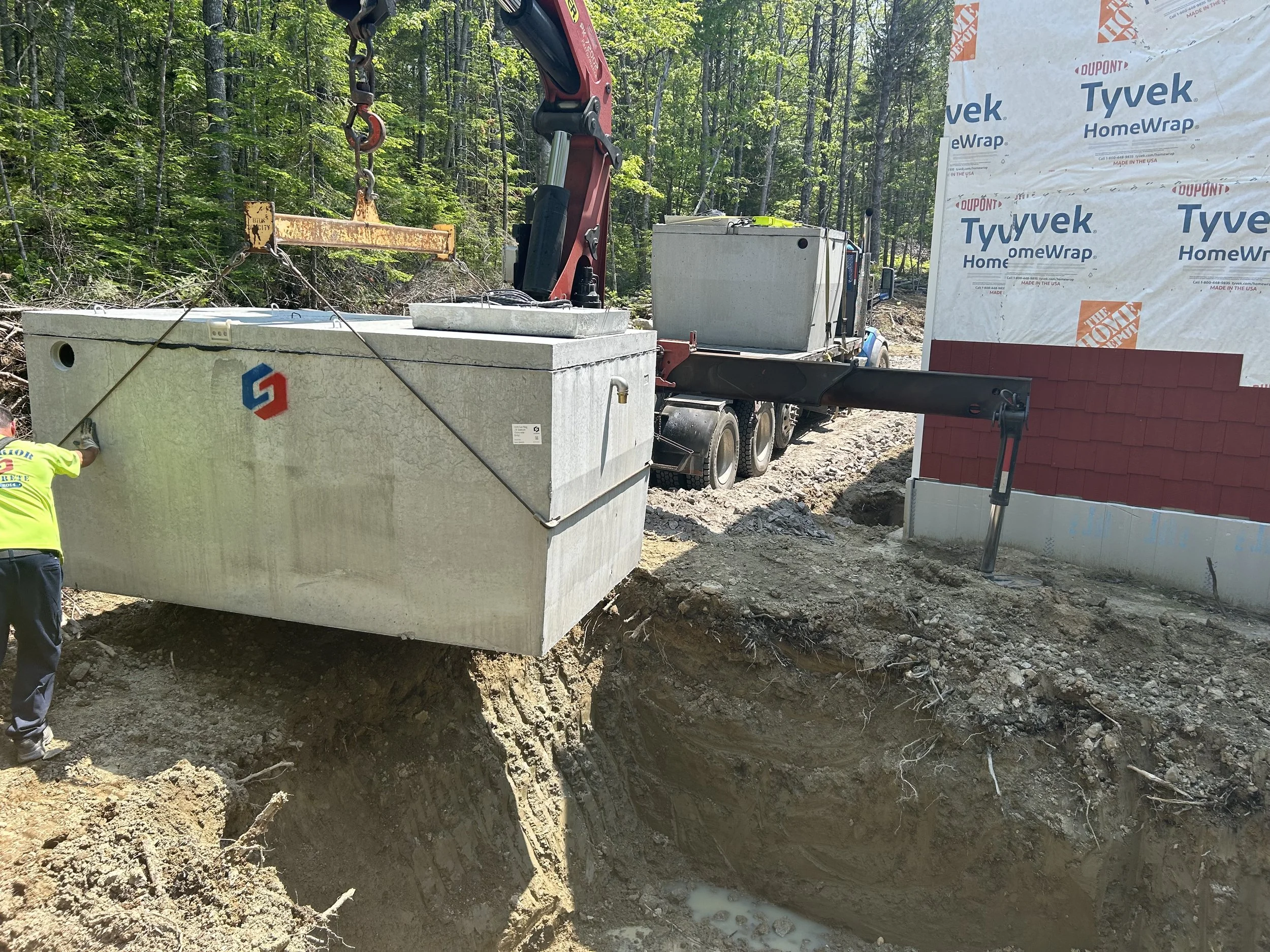
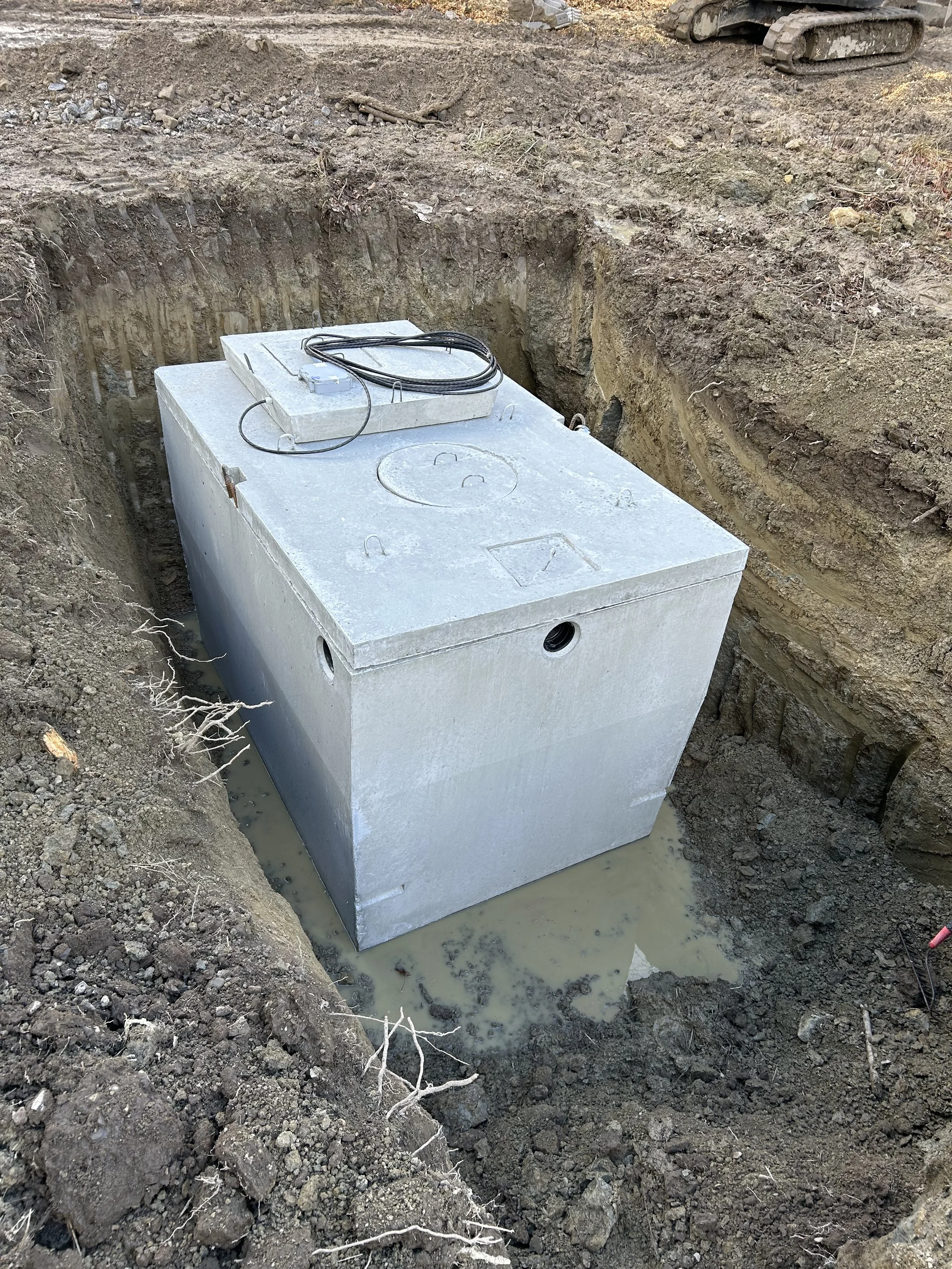
This 1,500 gallon tank was installed on Westport Island. The extra capacity is called for with some larger systems or those expecting high volume usage.