Foundations
Spear Head Excavation offers several different types of foundations for new home construction. In Maine, our climate requires frost protection for a home to last through the winter months. Frost protection is achieved either by depth or by insulation. The typical “full foundation” includes eight foot concrete walls which form the basement space. Full foundations have been very common for many years, but they do come with some significant drawbacks. While they offer a great space for storage or additional finished square footage, they are time, budget, and efficiency consuming and are susceptible to moisture problems over time. A frost wall foundation is very similar, but will often be limited to a four foot wall rather than eight. Slab to grade options have become more and more common in recent years due to these drawbacks. Energy efficiency is a huge factor for any new construction. The energy efficiency that can be achieved on a slab to grade foundation is vastly superior to any full foundation or crawl space option. Recently we have been putting in Frost Protected Shallow Foundations. This is essentially a slab foundation, but with some extra details to make it viable for our winter climate. The Frost Protected Shallow Foundation includes a deeper section of concrete around the perimeter which forms the footing. It is also fully insulated underneath, up the sides, and around the exterior perimeter. This insulation is what keeps frost from being able to penetrate underneath the concrete even at such a shallow depth.
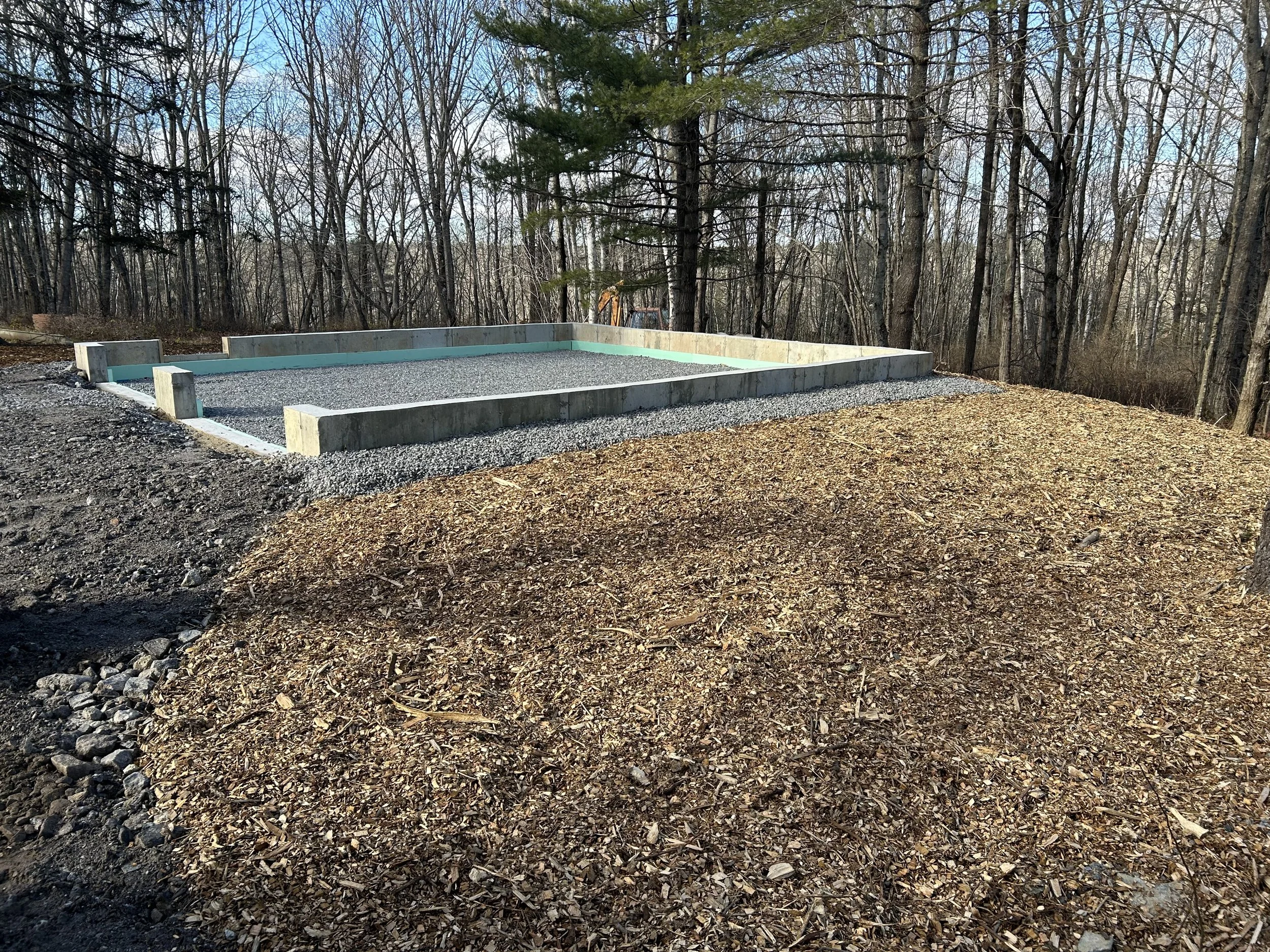
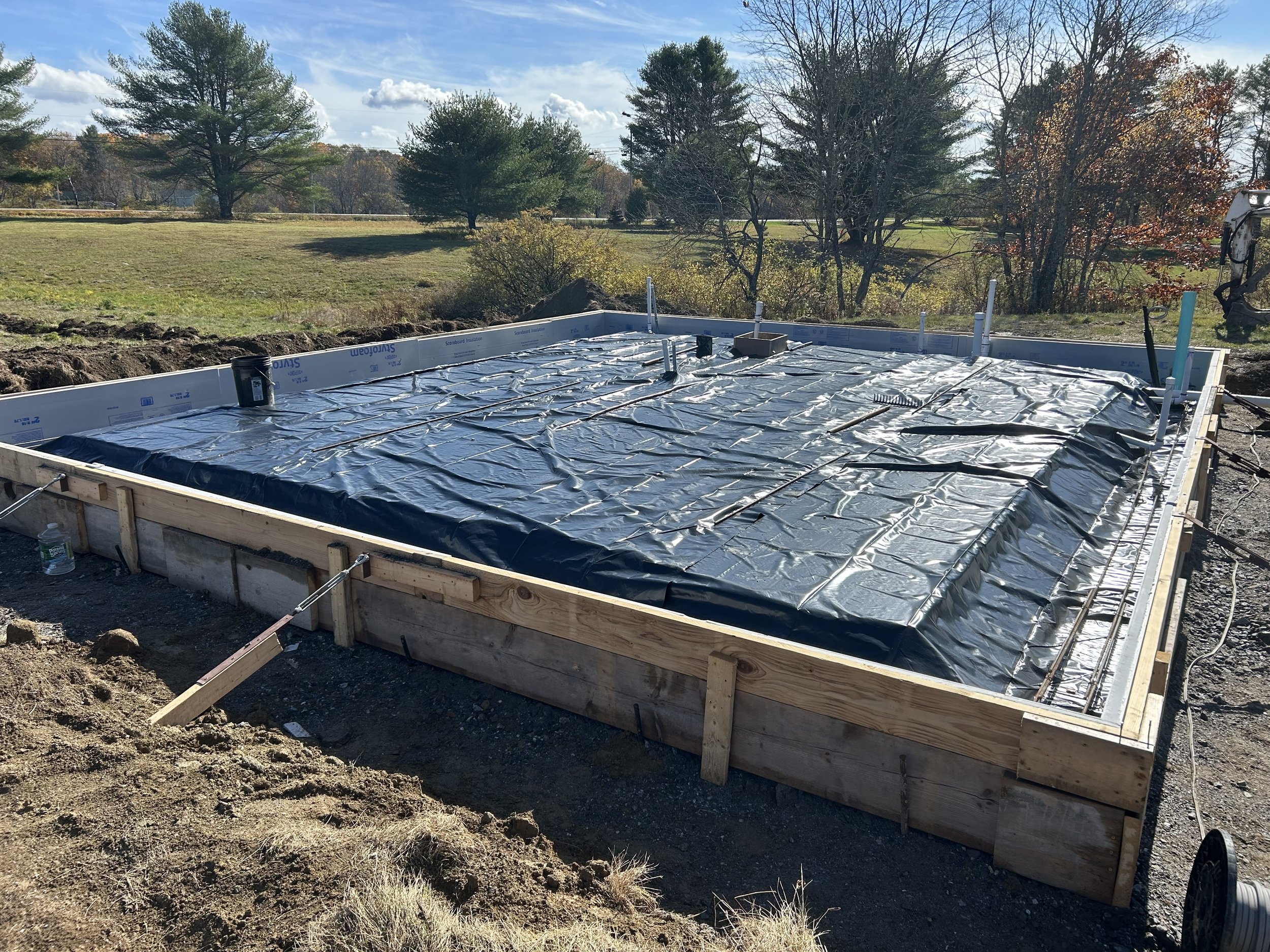
This is a frost protected shallow foundation that is formed up and ready to pour. This was part of a full site work project in Bowdinham, Maine which included a new driveway, septic system and foundation for a modest ranch.
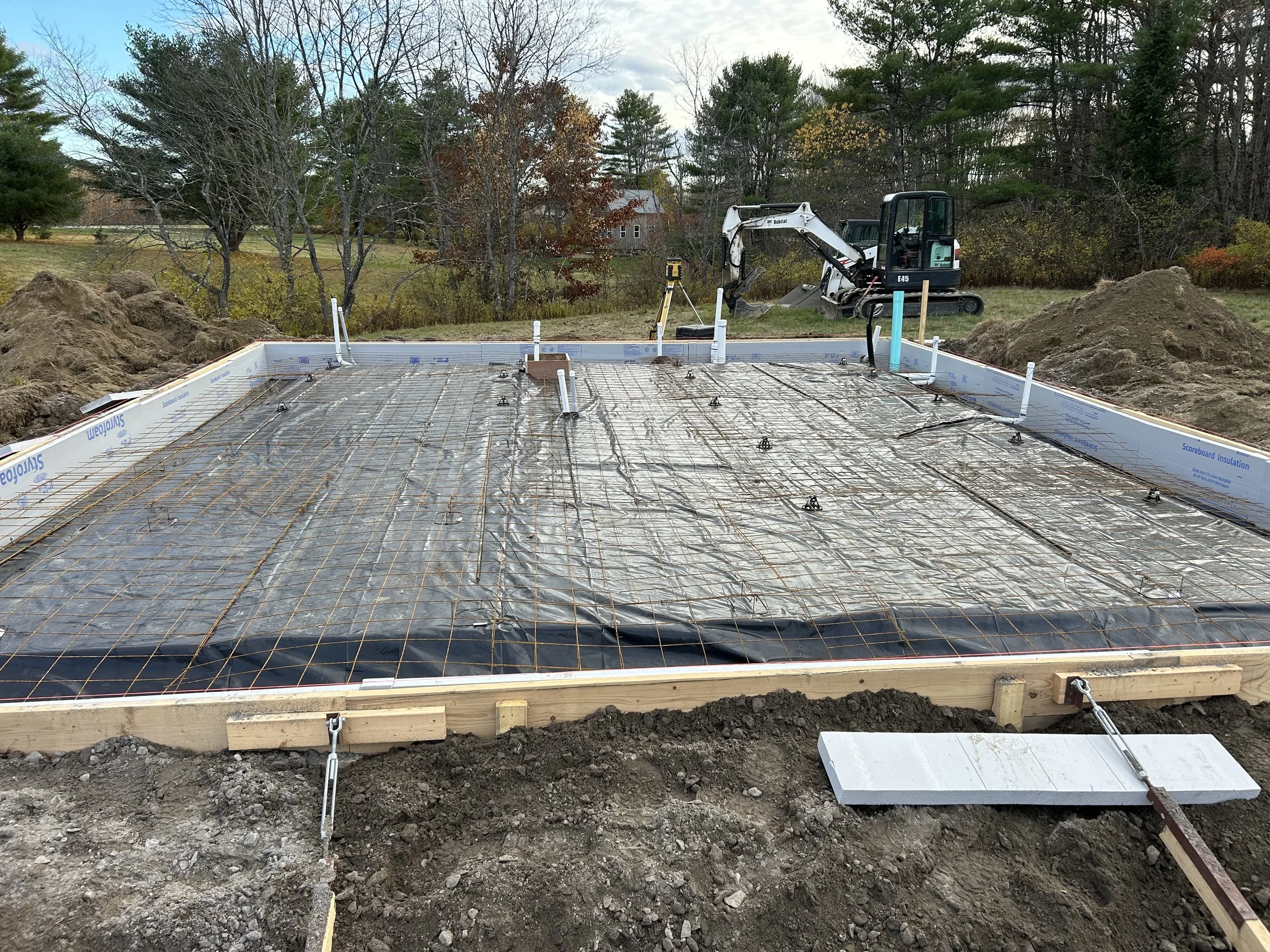
Here is another example of a Frost Protected Shallow Foundation. This was part of a home built by Spear Head Excavation in Durham, ME. Yes, we build homes as well! Find out more here New Home Construction.
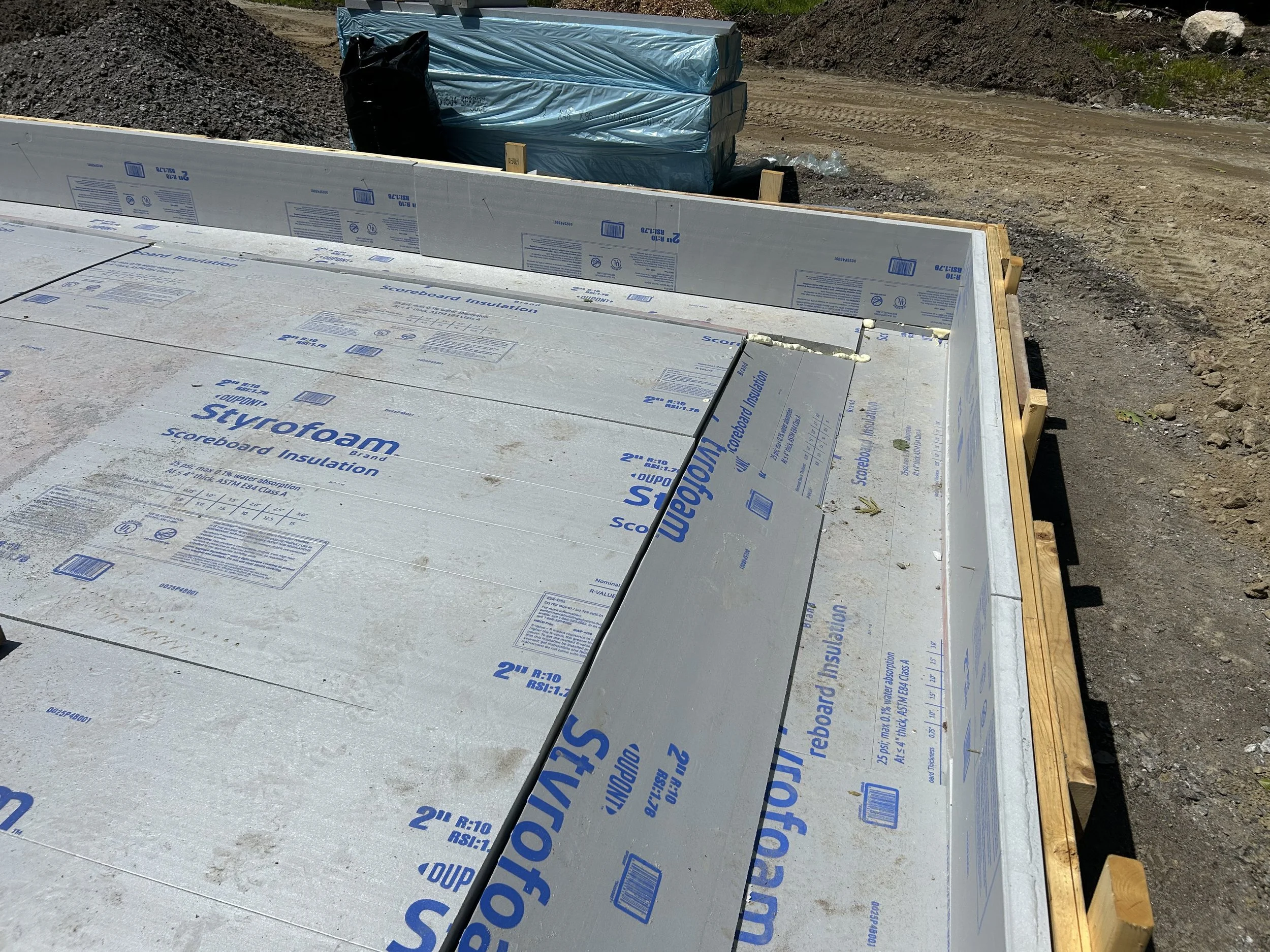
This is a six inch slab with radiant heat. You can see pictured how the insulation is applied underneath and around the perimeter of the slab. An additional two to four feet of insulation is added around the exterior perimeter after the slab is poured. This keeps the frost safely away from the concrete.
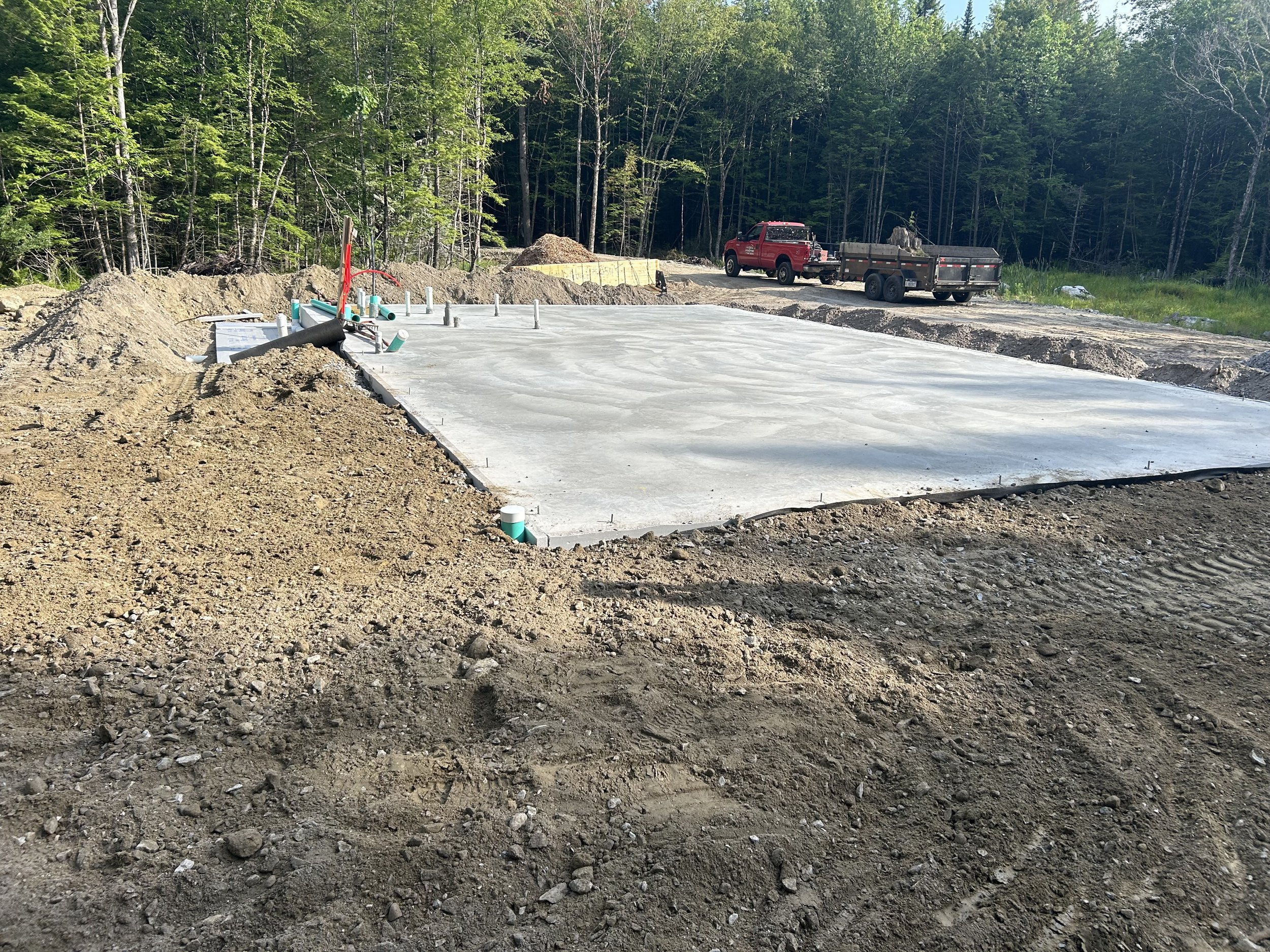
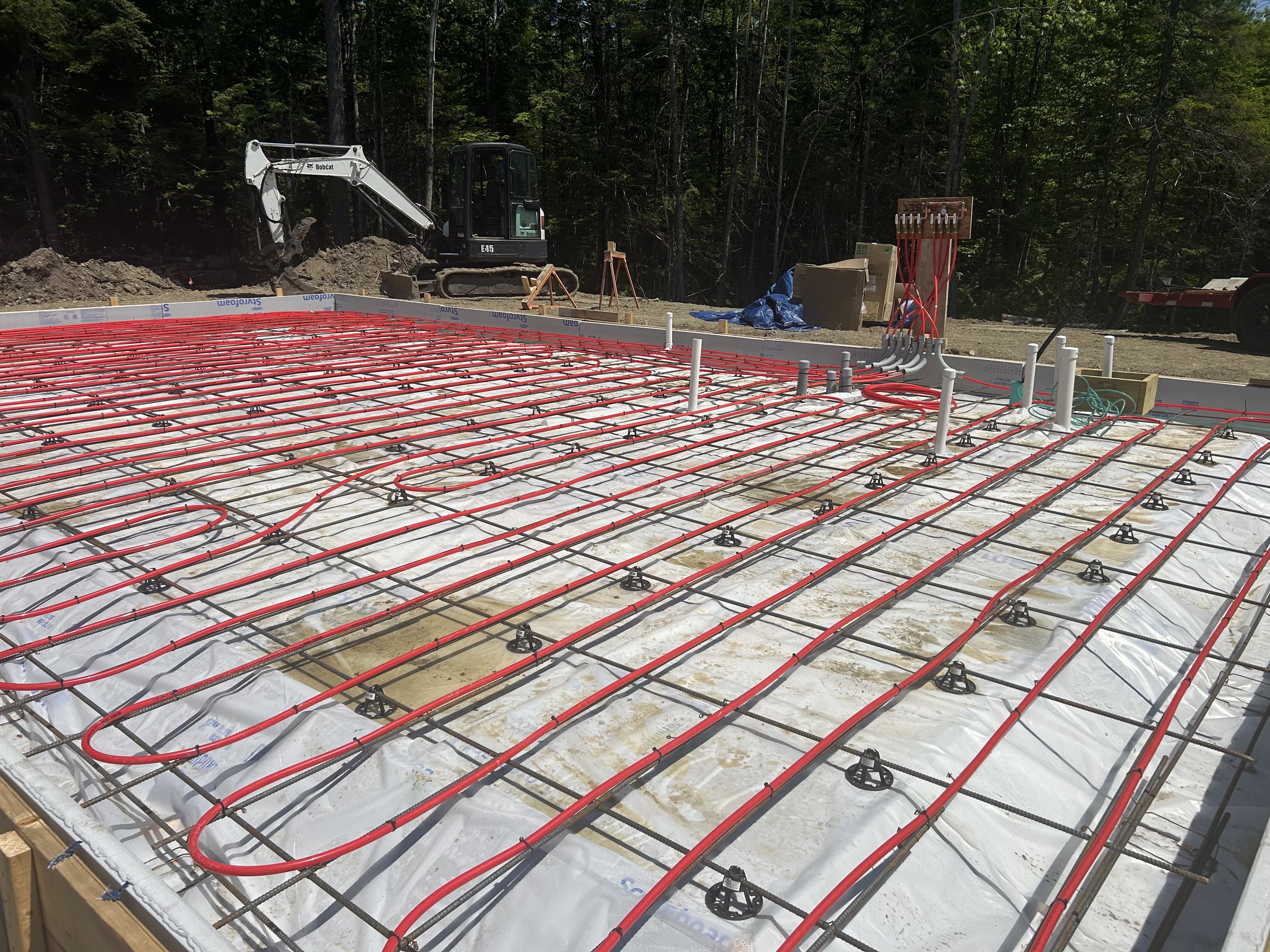
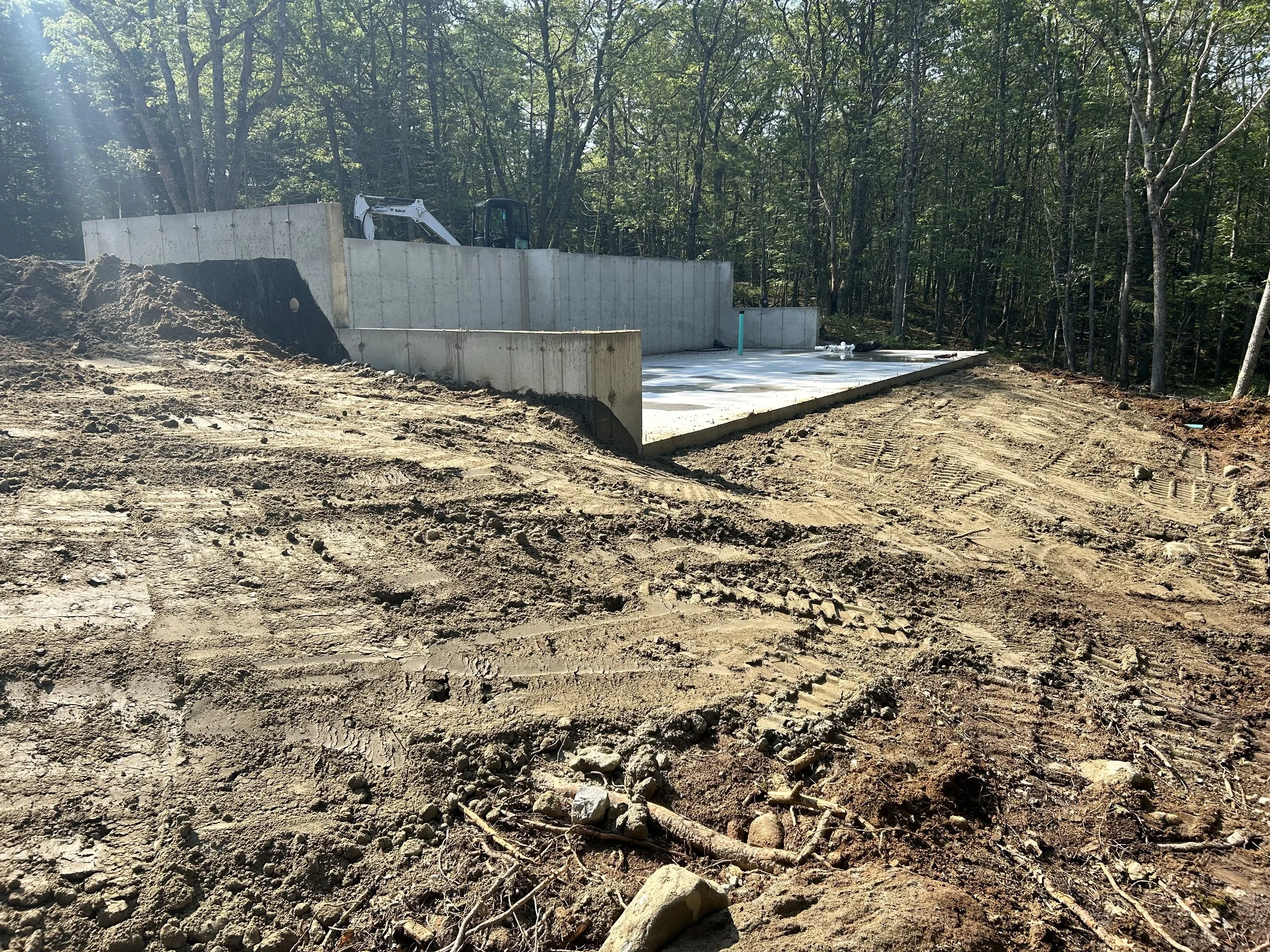
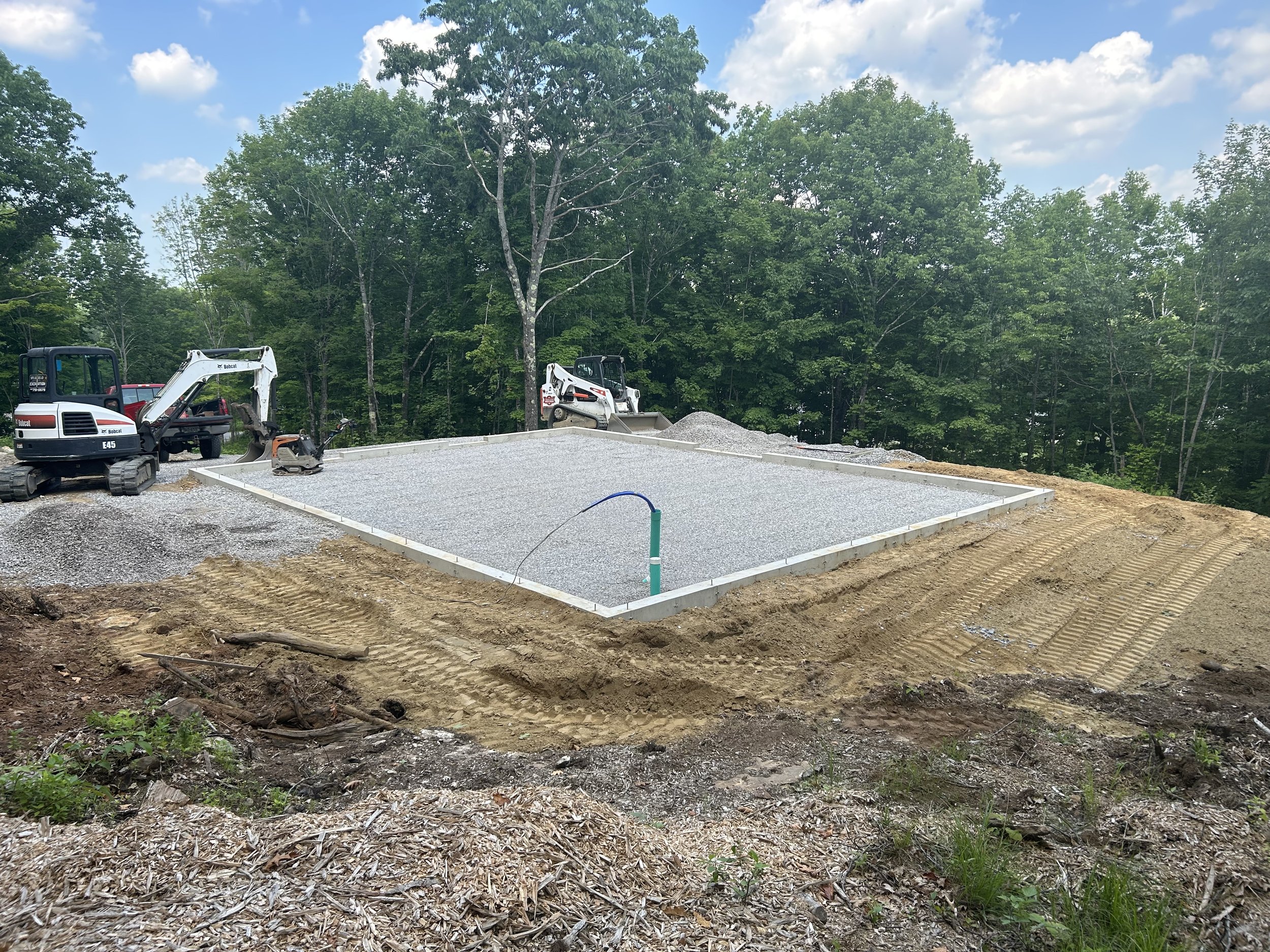
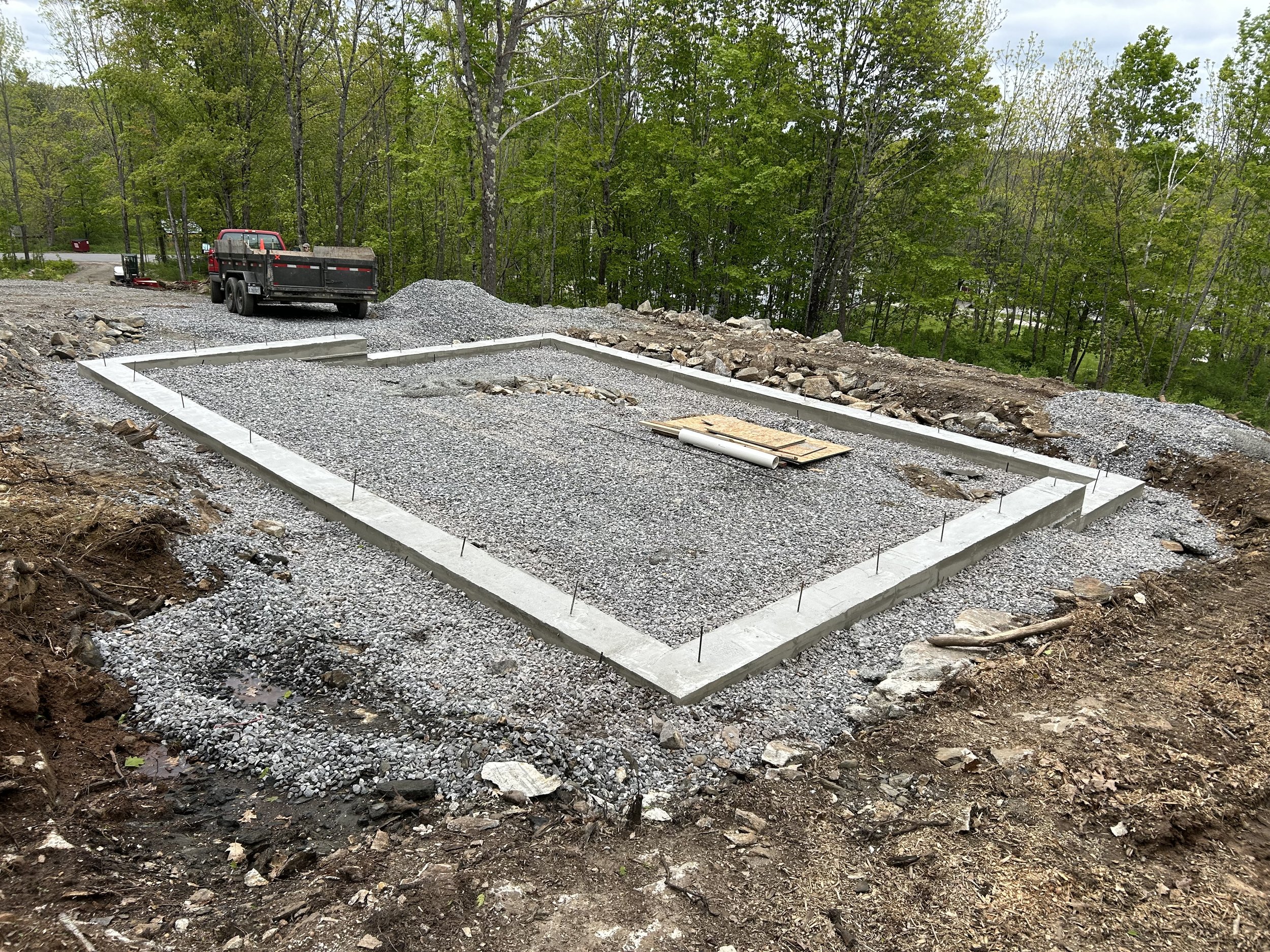
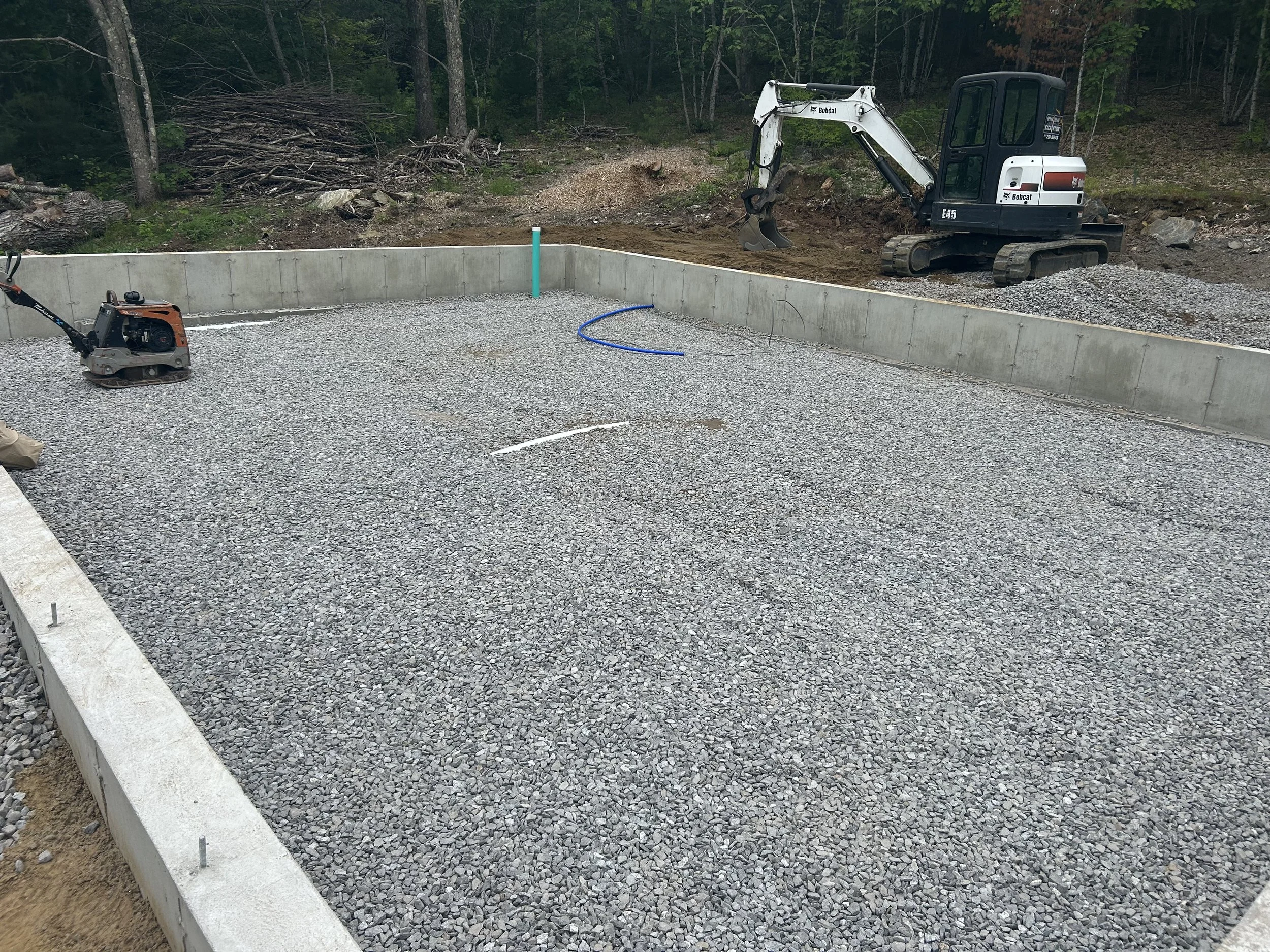
This is a slab to grade, frost wall foundation that was done by Spear Head Excavation in spring of 2025. It was part of a full site work project for a new home in Richmond, Maine.
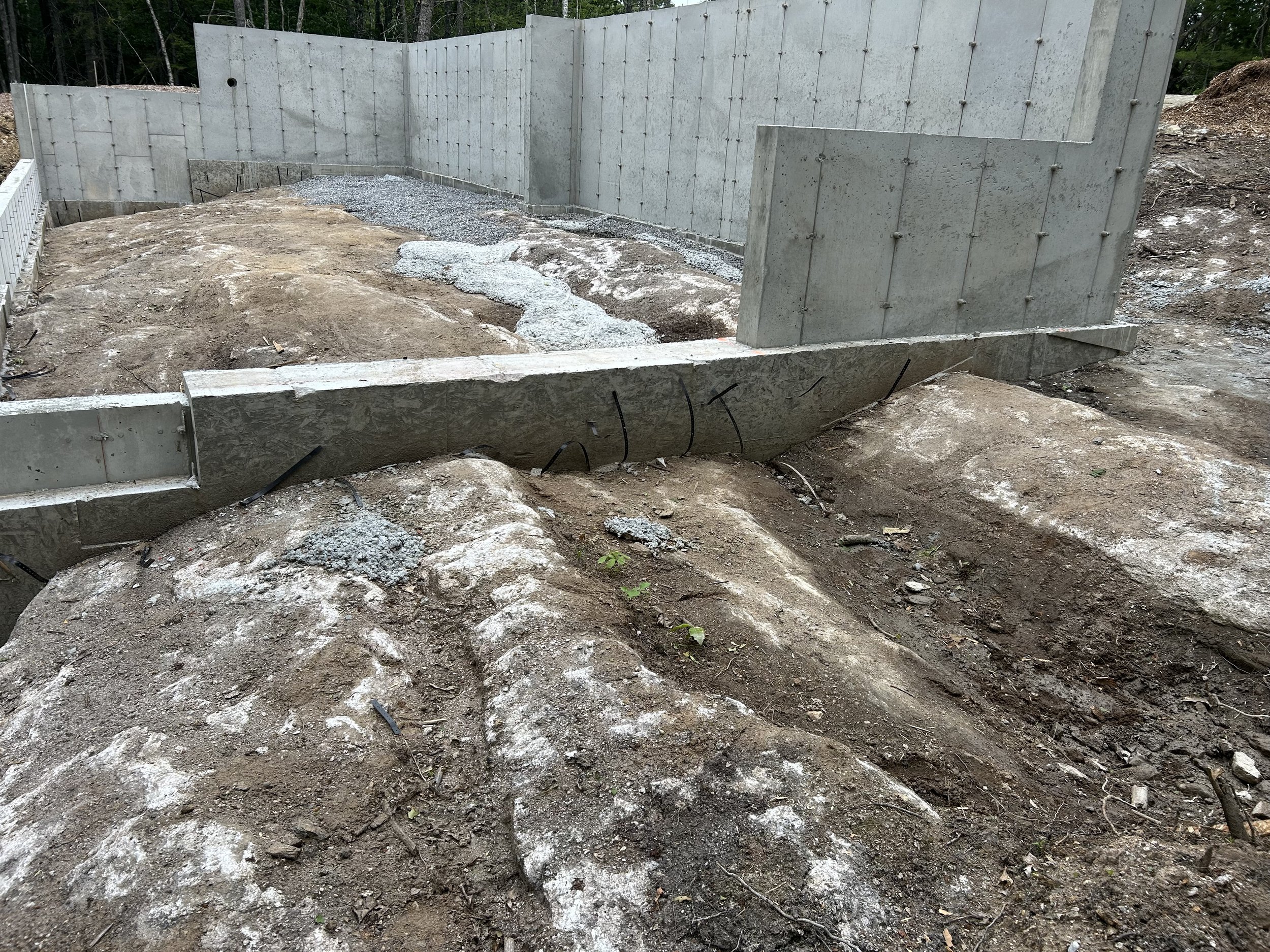
In this case, ledge was a major factor. We first removed a significant portion of the ledge using a hydraulic breaker, then brought in crushed stone to allow for drainage as well as square and level footings. A four foot concrete wall was poured on top of those footings and the whole thing was then backfilled with compacted crushed stone up to the level of the slab. Using a full frost wall like this on a slab to grade application is certainly not as cost effective as a Frost Protected Shallow Foundation, but it is essential when supporting a two story or larger building.
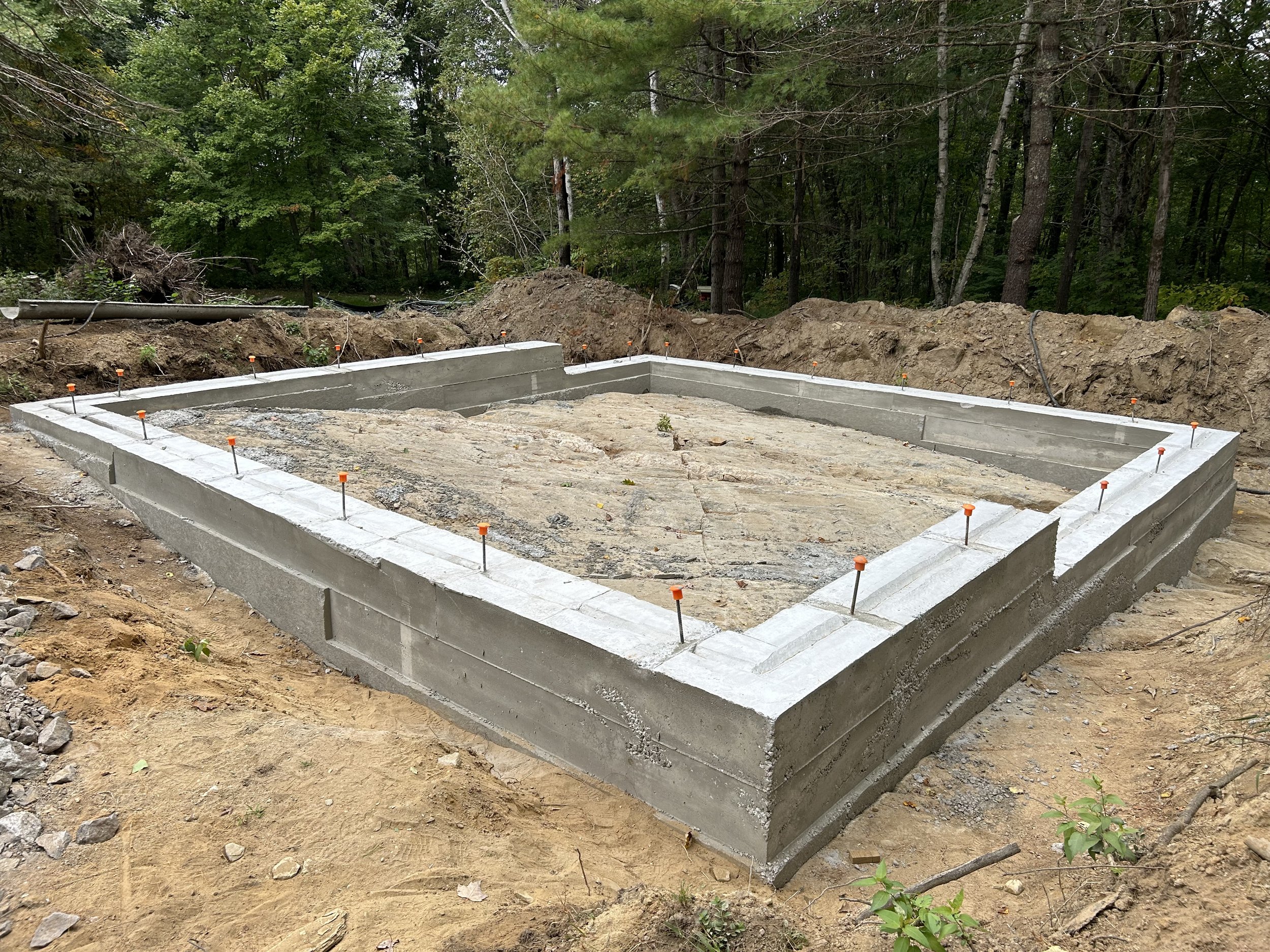
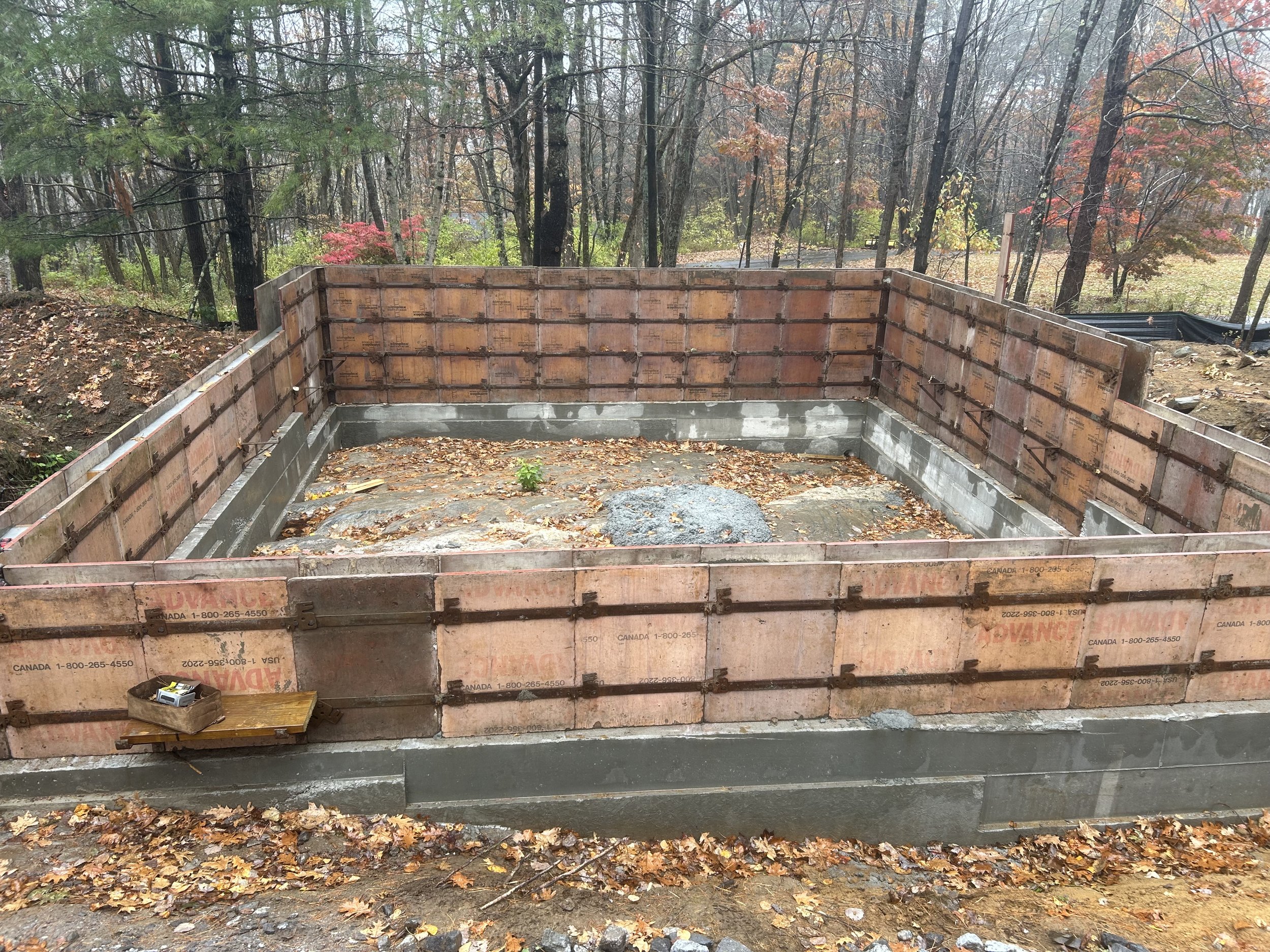
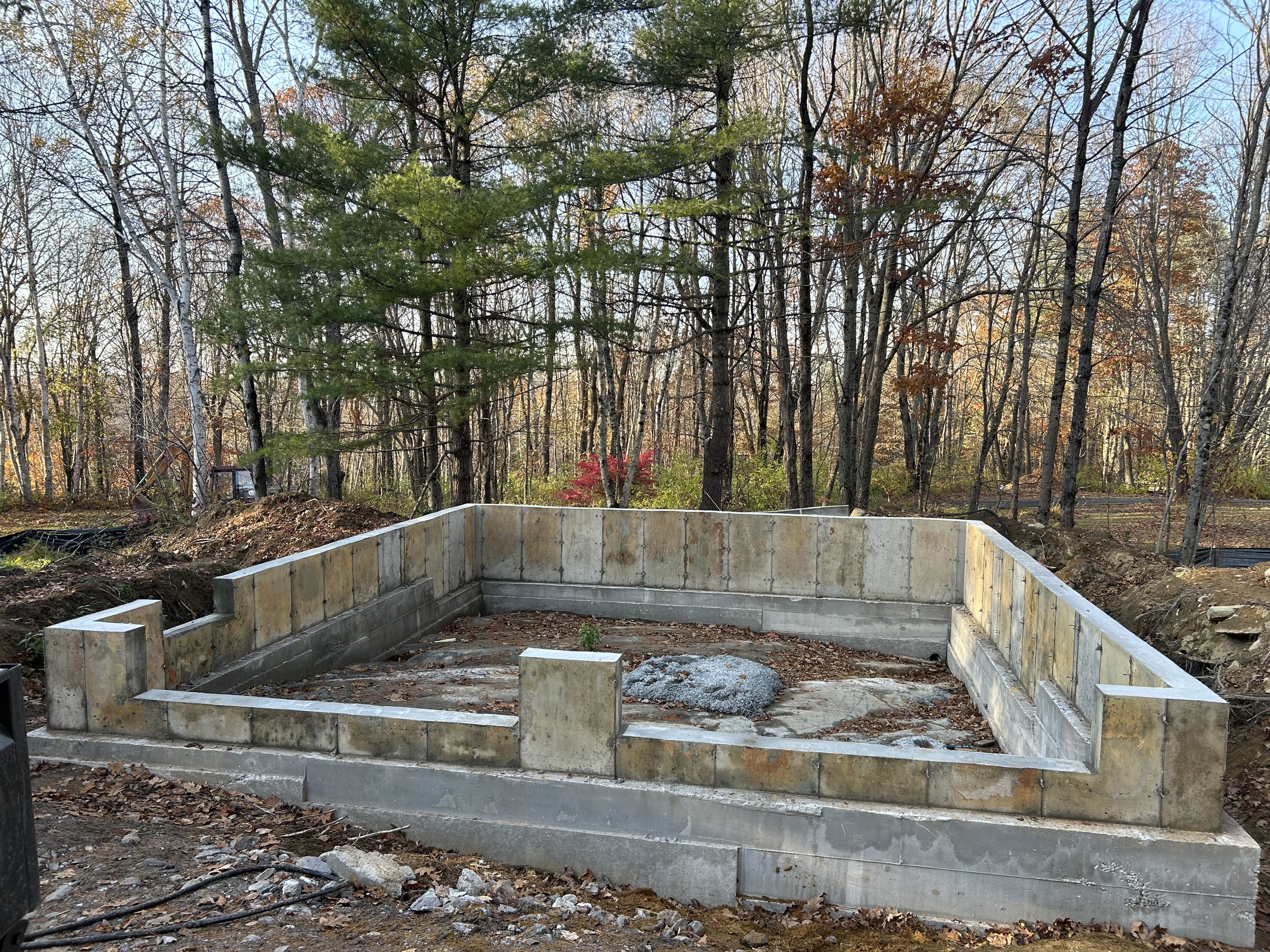
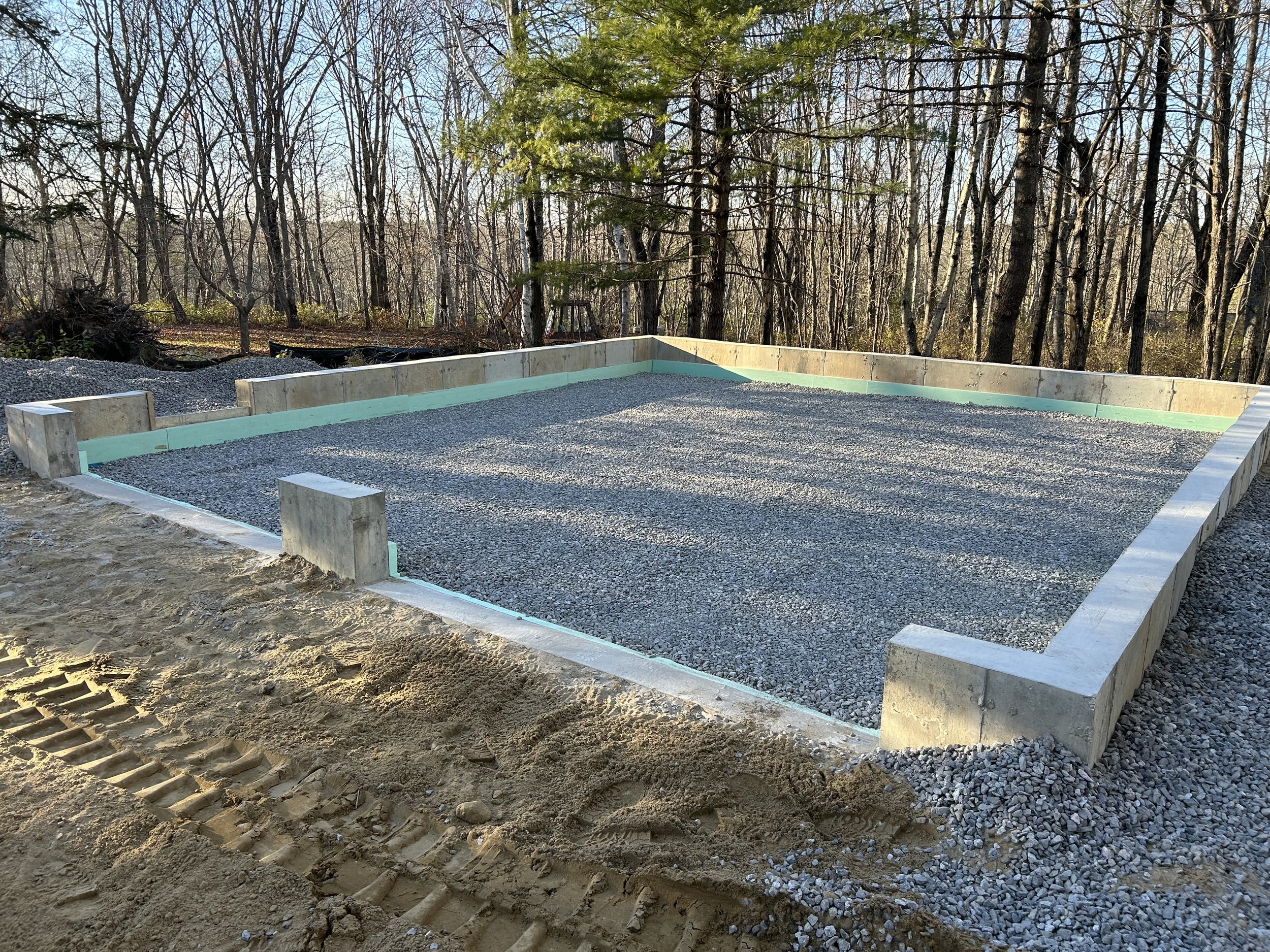
Another example of a frost wall and slab to grade application is this garage foundation in Brunswick done by Spear Head Excavation in late 2024. Like the previous example, ledge was also a significant factor here. Rather than removing any ledge, this footing was formed directly to it. This is very labor intensive and requires fully custom forming. It is often used when there is not the necessary depth for frost protection. In that case, binding the concrete directly to the ledge allows us to ensure that no water will be able to get underneath the footing, freeze, and heave it up.
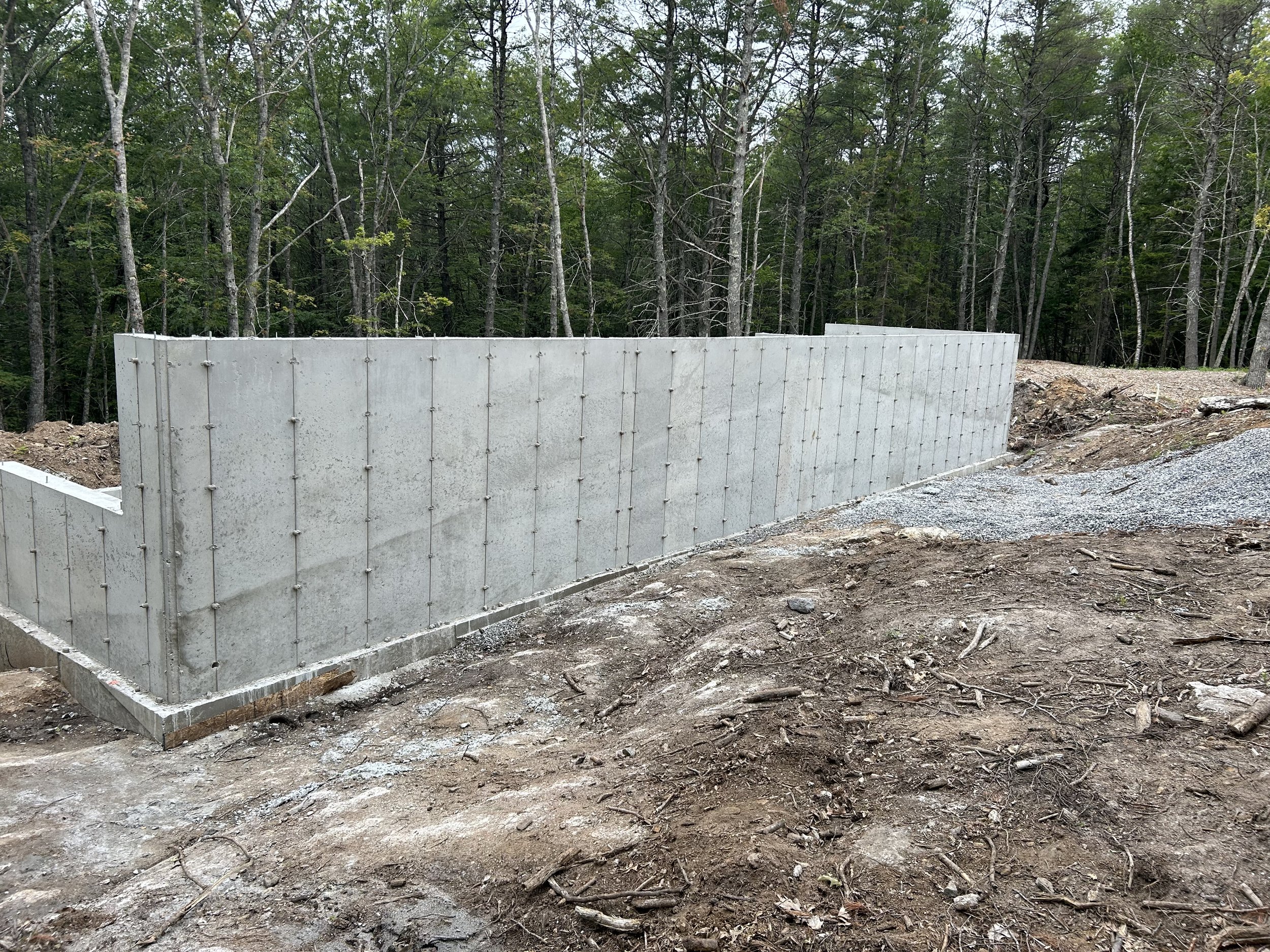
Here is an example of a full foundation with walkout basement. The digging and backfilling for this foundation was part of a full site work project by Spear Head Excavation on Westport Island in the spring/summer of 2024.
In this case the majority of the footing was scribed to the ledge and several different wall heights were required in order to match the grade of the property.